The sloppy slip knot and chain 2 methods are new to me. They look like good alternatives. Have you used theFoundation Single Crochet or Foundation Double Crochet (fsc and fdc)? Once I learned them I rarely chained to start a project, but I never was able to figure out a satisfactory way to start a ripple stitch with them. I don’t remember who but someone on these forums doesn’t like them. To each their own.
Tools to Help You Convert Knitting Patterns
"From The Knitting Fiend. Your source for free custom generated knitting patterns, tips, calculating tools and mindless knitting chatter on the web."
KnitPro
"knitPro is a free web application that translates digital images into knit…" Produce a grid from an image.
3 Easy Ways to Chart a Knitting Pattern
It seems to have been reincarnated as Knitting at Play!
I didn’t like the foundation chain at first. Now I do, although I don’t use it all the time. It saves time because it does the chain and first crochet row both at once. The handiest place I’ve used it is crocheting soles for baby booties. It eliminates those holes you get on the first row when you turn and crochet on the back side of the chain.
I am new to the forum and would like to ask a question.
I am knitting a shoulder wrap and it calls for a short row. I cast on 38 stitches and after 23 stitches hence the short row. I can do the short row stitch, but after the turn what do I do with the remaining 15 stitches because I am now knitting back to the beginning of row. What am I missing in the pattern? Thanks bas
You probably should ask your question in a thread of its own, over here in a blog thread it’s likely to be missed.
Leave the 15 stitches where they are and ignore them for now. Just follow the pattern instructions. You might understand better if you look at some short rows videos. Take your pick from some of these. The pattern will tell you when to work the 15 stitches.
[B]ETA [/B] As this is in my blog thread, I’m going to express my opinion perhaps more freely than usual when trying to give a reasonable answer to a very reasonable question. W&T short rows are generally pretty ugly. Unless it’s worked into the overall pattern and needed, I eliminate the wrap and use German short rows. Come to think of it, I’ve not encountered a situation where the wrap part of the W&T isn’t obtrusive, obvious, and less than desirable. That’s not to say it can’t and/or won’t happen, just so far IME it’s not.
Patterns should tell you if you’re going to be working with short rows so if you’ve new to them you can say, “huh?” and do some ferreting out of info and demos or whatever you need to be prepared. They aren’t really difficult but it can be so difficult to grasp the concept.
here is a stitch calculator. http://laylock.org/sts/ it is simple to use
Grumpy grandma
Thank you 4 ur help! I am continuing the project, after speaking with the designer of the pattern. Will let u know when and if I complete it.
Bas
Thanx. Bas
My version of diagonal dishcloth. I think this is what I did. I’m going to make another and will update if necessary.
CO 2 (3 ?)
K1,Yo,K1
K2,YO, Knit across, turn
Repeat till as wide as you want
K1, K2tog, YO, K2tog, knit across, turn
Repeat till 3 stitches (I think) and bind off
Thanks, Jan. That’s about what I’m doing except I did a kfb to inc to more sts (5? that would be 2 inc) and started the k2 yo.
I want to write out how I did the twist the yarn thing on the purl side for Fair Isle but I need someone to write it down as I figure out what my fingers are doing.
Bucket hat with a double layer brim
Socks
Socks
Socks
Test drive pattern wrap
Other things I’ve forgotten about
That’s my list of WIPs. I need to finish something. I’m tempted to start a dish cloth so I can finish something. Since I’m decreasing on the hat if I just stick with it I can probably finish it faster than a dish cloth. Surprisingly enough the hat hasn’t been frogged and seems to be more or less as I want it. Hopefully I’m not starting decreasing too soon but if I waited a few more rows I figured it would be too tall. Frogging is still a possibility.
I really want to play with my new yarn but I have to finish something first. I have decided the Cashmerino will make something for me, a short sleeve sweater maybe, I think there might be enough for one in my size and I could even get some in a color to coordinate if there’s not enough. It’s beautiful yarn I hope I don’t ruin it. It is meant to be used so I won’t just leave it on the shelf in plastic to keep it clean and just drool over it. It’s such a beautiful red. I like red and this red isn’t even orange-y, I can wear it.
I’ve needed small, easy, little-thought-required projects lately and socks fit the bill. What I don’t like is holes to try to fix when I turn the heel, I’m never satisfied with the patch job. What to do?
First, why are there holes when I turn a heel? It’s because when I work back and forth and then pick up all the turning stitches I’m actually part of a round ahead of the rest of the sock. (If I work and then turn the end sts I’m maybe two rounds ahead? Too complicated for me right now.) Solution? Don’t knit to the point of being part of a round ahead. How? It’s surprisingly easy. What I did, working 2@time, was:
For the first turn I worked until there was 1 st left on the needle, did my turn leaving 1 st unworked. This keeps me in line with the rest of the round beyond this point. After the first turn, leave 1 st unworked at the other end, staying in line with the rest of the round on this side. Work the rest of the short rows as normal. On the RS, pick up the turning stitches to the end of the needle and continue on to the next heel. This leaves 1/2 the turning sts to be picked up later when you finish the round after the 2nd heel which is worked in the same way. Finish the short rows on the 2nd heel and on the RS pick up the turning sts as you come to them leaving the rest lying in wait as before, continue on across the insteps of the socks, pick up the remaining turning sts as you come to them. NO HOLES. I wish I could post a picture to show you it works.
If you’re doing 1@time disregard the part for the 2nd heel and just keep going around after you pick up the turning sts on the RS.
I prefer easy solutions.
I feel I should mention that I’m not using an actual pattern, the method I use is from Lifestyle Socks. If you’re using a pattern you might need to do some adjustment to get the right number of turns and stitches remaining at the end of the short rows. I expect that a row or two fewer short rows or a couple of stitches off in the count at the end of the short rows isn’t critcal most of the time. You decide.
I have 3 sweaters that need finishing, but just want easy, portable and quick lately so been doing the hats. Socks are good, but I’m faster on hats and can’t wear the socks so they aren’t really fun for me.
My socks don’t get holes with the method I use. I’ll find and share it although you seemed to find a solution.
Mesilla
Top-down, short sleeves, cotton top
3timesChic
"This EASY pullover works in any yarn that knits to a 3sts/inch gauge.
Looks great in a bulky cotton, wool, mohair or ribbon!
AND has a surprise twist in the pattern finishing!"
Free Knitting Pattern: Earthtone Unisex Knit Cardigan
Basic cardigan. Gauge: 17 sts = 4"
Margot
"The construction is straightforward – cast on at the top, join to work in the round and settle in for some relaxing knitting (minimal purling!). Knitted from the top down, this pattern allows you to try the in progress piece on and get the perfect fit."
GAUGE
20 sts/28 rows = 4 inches in stockinette st
Openwork Tunic Top
Written for Lion Cotton yarn
Knit a plus-size twisted-rib cardigan: free pattern
And links to more plus size patterns
Van Dyck Pullover
Turtleneck pullover. GAUGE: approx. 12 sts/14 rows to 4"
Yosemite
Twisted stitch mini-cable for Kat 
I feel selfish and want to use it for myself. It’s lovely and I’m almost afraid to use it, I don’t want to ruin it.
12 balls in red
1 ball in gray
Sweater top or vest?
Challenges: My shoulders are narrow so I need medium size there, then I need larger and probably short row darts, but I’m still narrow across the back, then larger still for the hips. I’m put together from mismatched parts. Top-down seems to be the best bet. A line?
[U]Pattern links[/U]
Bad penny
A raglan sleeve T top. The pattern isn’t in wool, but I think it would work.
GAUGE 20 sts/32 rows = 4" in stockinette st with MC and larger needle - U.S. 8 & 4
Gemini
"This tee shirt is knit using a cotton linen blend at a loose gauge. The result is an elastic fabric that works up quickly and fits beautifully. The top half of the yoke features a lace panel covering the shoulders and back.
Named after the duality of the Gemini, this pullover can be worn with the lace to the back for a more casual look or with the lace facing forward for a dressier look."
GAUGE 22 sts/28 rows = 4 inches in stockinette stitch using US 6/4mm needles
Margot
"The construction is straightforward – cast on at the top, join to work in the round and settle in for some relaxing knitting (minimal purling!). Knitted from the top down, this pattern allows you to try the in progress piece on and get the perfect fit."
GAUGE 20 sts/28 rows = 4 inches in stockinette st U.S.5
Schooly
"It’s a quick knit (great for working on in class) but has some fun stitch patterning at the shoulders. It’s reminiscent of my Bad Penny pattern, but updated for a modern silhouette.“
GAUGE 20 sts/30 rows = 4” in stockinette stitch; 20 sts/16 rows = 4" in elongated-stitch pattern U.S. 7 & 5
Peekaboo Sweater
"There is only one size available, 38". However it is a top down raglan which means customizing the size is very easy and is only a matter of doing fewer or more increases to get the sweater to fit you right."
I’ve been given about 3 tons of acrylic yarn; she realized she’ll not have time to use it. I plan to start making hats to give to charity. I should be able to play with yarn for a year and not run out! I can play with color combos and styles and make some plain beanies, depending on how much or how little I want to think. Right now the less think the better. Some of it might be suitable for baby blankets and I can probably find somewhere to donate them too. Another chance to play with stitch patterns.
I have a sweater to finish that I keep forgetting about. :shrug:
Cast Ons
Adding cast on stitches
TECHknitting: Casting on additional stitches at the end of a row or over a gap by the loop cast-on method: a trick for beautiful fabric
Using fewer loops and taking up the slackCOWYAK provisional cast on
Bind Offs
Jeny’s Suprisingly Stretchy Bind Off planetpurl
http://www.youtube.com/watch?v=53Mtbkyf5CQTECHknitting - Ordinary chain bind off, part 3: binding off circular knits
TECHknitting: Ordinary chain bind off, part 3: binding off circular knitsDecrease bind off
http://www.youtube.com/watch?v=20BQ1dbP0kICrochet bind off
http://www.youtube.com/watch?v=efRaicXpT_8When I’ve used a crochet bind off I guess I used a smaller hook as it produces a less stretchy bind off. Sometimes I want a less stretchy bind off to add stability.
For anyone who is as mildly obssessed with the alternate cable cast on and tubular cast off as I am, here are a couple of links for the 2x2 versions.
2x2, 1x2 & 2x1 Alternate Cable Cast Ons
http://www.woollywormhead.com/knit-and-crochet-1/
2x2 Tubular Cast Off
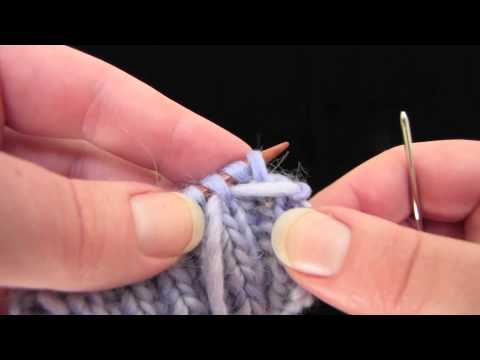
How to fix a cable mistake by reknitting just the stitches involved. It can also be used for other stitch patterns. Very useful to know!
Thank you, gcp, for posting the link to answer your question! How to fix a cable mistake thread.
I just used this method to save frogging and found that using smaller bamboo DPNs was useful.
[B]Twisted stitches, mini cables[/B]
Shandeh’s T2R video
T2R = Twist 2 to the Right, is the same as C2R = Cross 2 to the Right.